
Confirm the Bristol Search Side
Bristol is one community in daily life, but its records split at the Tennessee and Virginia line. A plain Bristol address may point to Sullivan County, Tennessee, or to a separate Virginia city and record system. Check the state, ZIP, county, and parcel jurisdiction before searching. State Street business listings and older newspapers often omit that detail, so the city name alone is weak proof.
For a Tennessee-side person, local land, tax, marriage, and most trial-court records route through Sullivan County. Bristol is not the county seat. Blountville holds many core county functions, while Bristol has useful satellite counters. Historical searches need the same care. Early sources may use Bristol, Goodson, Tennessee, North Carolina, or a regional label without showing a move.
Use records lawfully. Confirm identity with more than a name, respect protected addresses, and never use a lookup to stalk, harass, intimidate, or harm anyone.
Build a Bristol People Search
The best first record depends on what is known. A current street can lead to a parcel and owner. A full name may lead to a deed, court filing, business record, license, or state offender result. An old street works better in a reverse city directory, where householders appear by address. Family questions may require an obituary, probate file, marriage record, or cemetery entry.
Keep identifiers from each source. A parcel number can unlock a deed. A case number lets the right clerk find a file. Book and page references lead from a marriage index or land index to the underlying record. Use dates, middle initials, relatives, employers, and streets to separate people who share a name.
- Confirm that the person or address belongs on the Tennessee side of Bristol.
- Search the property roll by owner or street, then save the parcel and mailing address.
- Move to recorded deeds, court divisions, business filings, or licenses based on the question.
- For an older trail, compare city directories, newspapers, probate, and historic county records.
- When no portal holds the answer, contact the named custodian with a narrow record request.
Bristol Records Search Offices
Sullivan County offices divide the record trail by function. The Register of Deeds records conveyances, liens, releases, and plats. The County Clerk handles marriage licensing, county business and beer licenses, notary matters, and commission minutes. Bristol’s city records coordinator handles city files under the city TPRA policy. Full access rules and copy procedures appear with the Bristol public records system.
Sullivan County Register of Deeds
Blountville, Tennessee
Confirm the current counter address before visiting.
Chancery has a Bristol counter in Room 239 at City Hall. Law, General Sessions, and Juvenile matters use the Bristol Justice Center. Deeds, probate, assessment, and older files may still require a call or trip to Blountville. Confirm hours before travel because the right office matters more than physical closeness.
Search Bristol Property Owners
The Tennessee Property Assessment Data portal is the cleanest official name and address search for Sullivan County land. Its simple search accepts a property address, owner name, or parcel ID. Advanced controls can narrow by subdivision, classification, sale dates, control map, group, and parcel. Choose Sullivan County jurisdiction 082 and keep leading zeroes in parcel parts.
| Search field | Useful input | Why it helps |
|---|---|---|
| Owner Name | Surname or business name | Finds assessed owners and name variants |
| Property Address | Street, with number optional | Finds a parcel from a known place |
| Parcel ID | Map and parcel identifiers | Targets one official parcel |
| Subdivision | Recorded subdivision name | Helps when a street changed |
| Sale Date | Start and end dates | Narrows a transfer period |
Results can show owner and mailing addresses, the physical property address, parcel and control-map parts, subdivision, class, appraisal, assessment, sale details, and a printable parcel report. The mailing address may supply a later contact point, but it is not proof of present residence. The Sullivan County Assessor maintains the roll, while the assessed owner is not final title evidence.
The official owner-and-address screen shows how broad the first search can be.
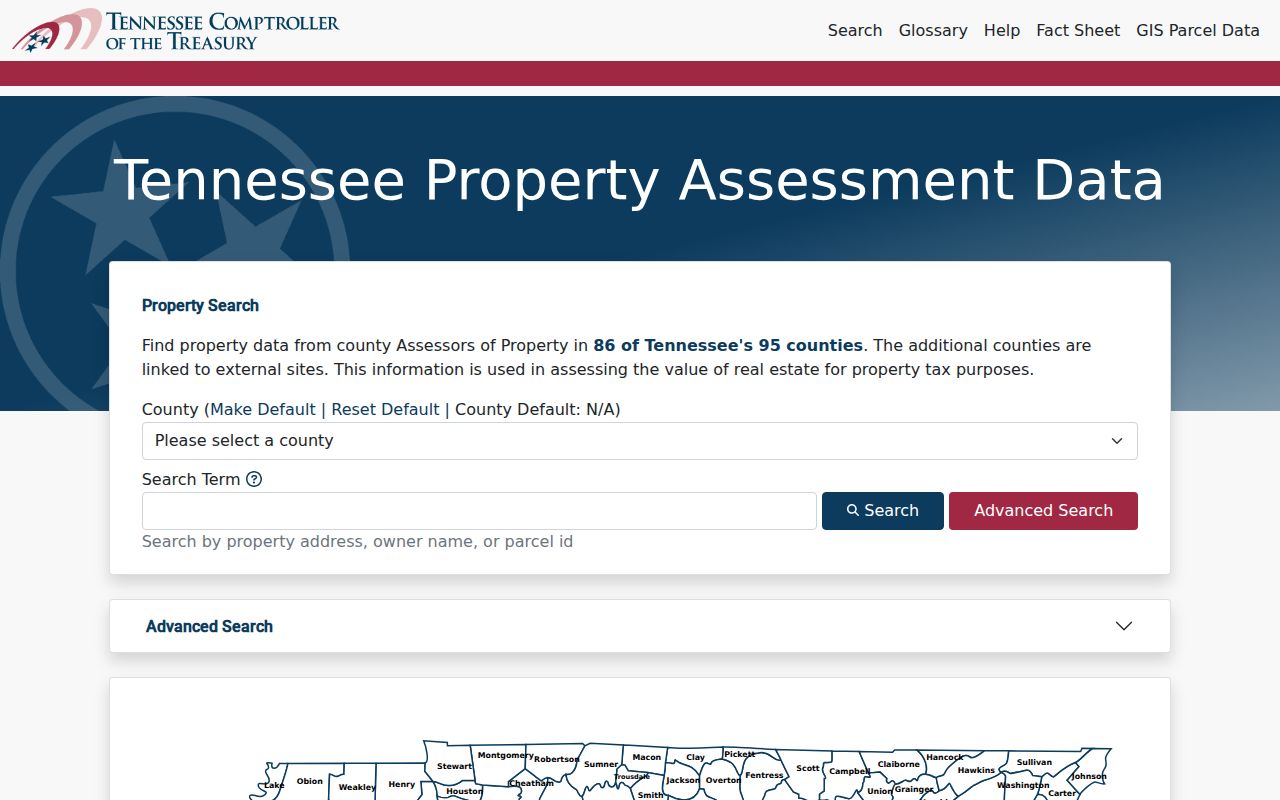
Save the parcel ID and the report’s update date before moving to deeds or maps.
Map Bristol Records to Deeds
A parcel search becomes stronger when it reaches the recorded instrument. Open the assessment record, follow its GIS link, confirm the physical parcel and legal description, then search the Register of Deeds by grantor or grantee. A grantor transfers an interest; a grantee receives it. Read the deed and its prior instrument references instead of treating the tax card as proof of title.
- Situs address
- The physical location of the property.
- Mailing address
- The address used for tax correspondence, which may be elsewhere.
- Parcel
- A tract identified in the assessor and map systems.
- Plat
- A recorded map that shows lots, boundaries, or subdivisions.
- Index
- A finding aid that points to a document, not the document itself.
The TNMap property viewer supplies map context after the assessment search.
Bristol’s local open-data services add annexation, address, zoning, and flood context, but recorded plats and deeds control acreage and ownership evidence.
Note: An occupant named in a directory may differ from the owner shown in tax and deed records.
Search Bristol Court Records
Bristol court records do not live in one broad city portal. Circuit and Law, General Sessions, and Juvenile records are maintained by the Circuit Court Clerk. Chancery and Probate use the Clerk and Master. Nonconfidential files, minute books, and Laserfiche records may be inspected through the responsible clerk. Ask with a complete party name, approximate filing date, case type, division, and case number when known.
| Bristol record division | Typical material | Search route |
|---|---|---|
| Circuit and Law | Civil and criminal filings | Clerk docket or counter request |
| General Sessions | Sessions cases and dockets | Bristol counter or clerk contact |
| Chancery and Probate | Equity matters and estates | Room 239 or Blountville clerk |
| Municipal Court | City ordinance and code cases | City service counter; no broad name portal verified |
| Federal court | Eastern District federal matters | PACER party and case search |
Clerks screen Social Security numbers, account numbers, and protected addresses. Juvenile, adoption, sealed, expunged, and protected family material is not ordinary public name-search content. A docket shows that something was filed or scheduled; it does not by itself prove the outcome.
The Sullivan County Circuit Court page identifies the trial-court access points serving Bristol.
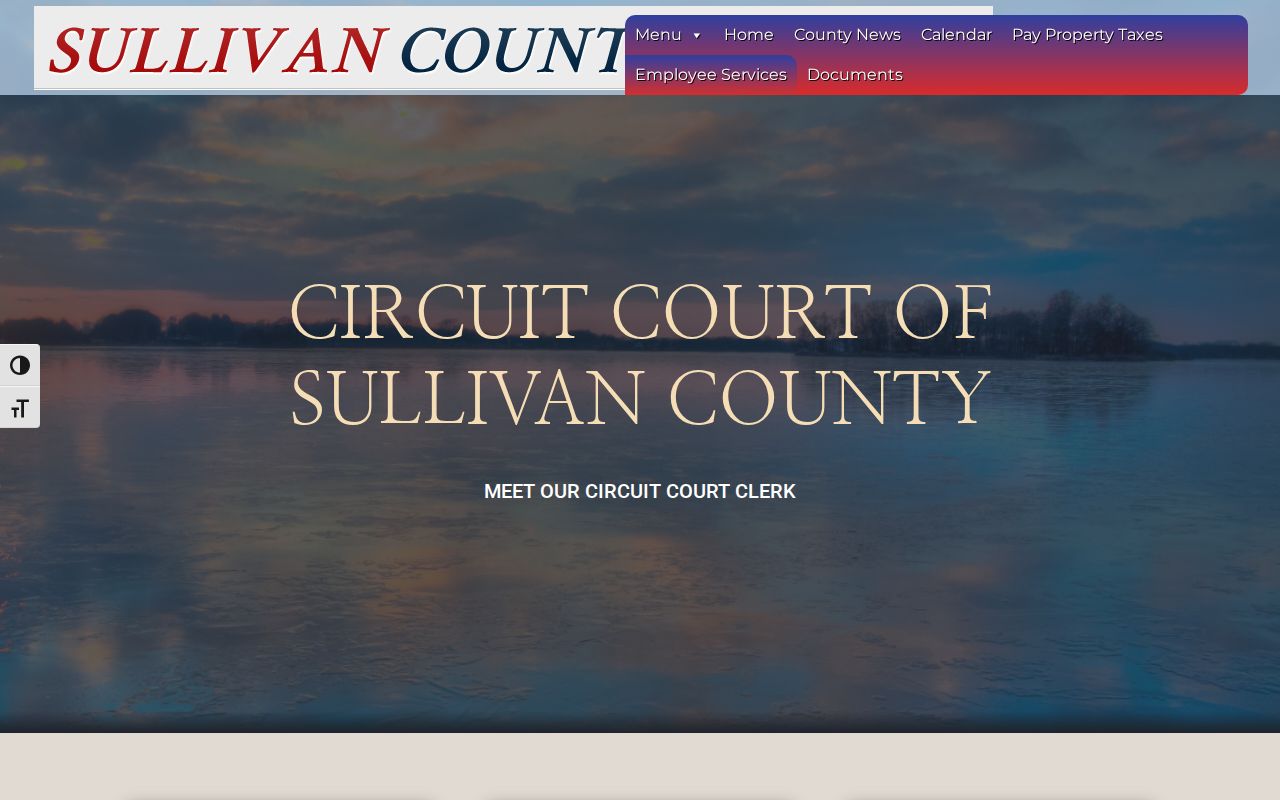
Use its division contacts to avoid sending a request to the wrong clerk.
Trace Bristol Heirs Through Probate
An obituary or death reference can lead to an estate file. Sullivan County Probate records may identify the decedent, personal representative, heirs, counsel, property, and filed notices. No broad official local probate name portal was verified. Start with the Clerk and Master, using the decedent’s full name and an approximate death or filing year, then ask whether the file is in Bristol or Blountville.
A sound heir trail moves from obituary or death evidence to the probate petition, will, notices, and representative. A later deed may show how estate realty passed. Each source has a different purpose. An obituary names reported family, probate shows claims made in court, and a deed records the land transfer. Compare ages, addresses, relationships, and document numbers before deciding two names refer to one person.
Older probate research reaches the Tennessee State Library and Archives. Sullivan County wills begin in the archive inventory in 1838, while estate inventories cover later nineteenth-century volumes. Some very early county material is cataloged under North Carolina-era jurisdiction because Sullivan County predates Tennessee statehood.
Locate Bristol Vital Records
Birth and death certificates route through the Tennessee Office of Vital Records and eligible local health channels. State-held certificates are not an open people index. Tennessee law limits certified copies to qualified applicants while records remain in the vital-record system. The application, identification rules, and current cutoff should be checked for the exact record series.
Marriage and divorce follow different paths. The Sullivan County Clerk issues marriage licenses and maintains county marriage material. Divorce is a court case, so the file stays with the appropriate court clerk even when a state certificate or verification is available. Adoption and related protected records cannot be bypassed through a general search.
Transferred historical records become genealogy sources through the state archives and county microfilm inventories. Record dates and access rules vary by series. An index entry is only a pointer. Order or inspect the underlying certificate, license, bond, decree, or register entry when a date or relationship matters.
Bristol Marriage Records Reach 1863
The Sullivan County Clerk reports a scanning project that reaches marriage records back to 1863. That date creates a useful bridge between present clerk services and family-history work. Search a name with spelling variants, married and maiden forms, initials, and an approximate year. Capture book and page references whenever the index supplies them.
Earlier material requires a deeper archive check. The state library’s Sullivan inventory includes marriage documents and microfilm, and one cataloged run contains a small number of pre-1863 items. A missing online hit does not establish that no record exists. Ask the Bristol or Blountville clerk about the evolving scan range, then check archive catalogs and microfilm rather than guessing about a gap.
Marriage licenses document the licensing event and named parties. They do not prove that every later directory entry with the same surname belongs to that couple. Connect the record to an address, age, family member, newspaper notice, or deed before using it to join two Bristol trails.
Browse Bristol Historical People Records
The Bristol Public Library opens a rich cross-border path through digitized city directories. Verified volumes run from 1896–97 through 1948–49, with gaps and multiple volumes in some years. Alphabetical entries commonly list a resident, spouse, occupation or employer, and home address. Business sections name firms, owners, officers, and locations.
The 1948–49 Hill directory is especially useful. Its fourth department arranges streets and numbered buildings, placing householders or businesses opposite each address. It also marks intersections, some home ownership, and phone numbers. A fifth department lists telephone numbers in numerical order. Those two parts support address-to-occupant and number-to-subscriber research even though the title does not say “reverse directory.”
The library gateway leads to the local collections used in Bristol name and address research.
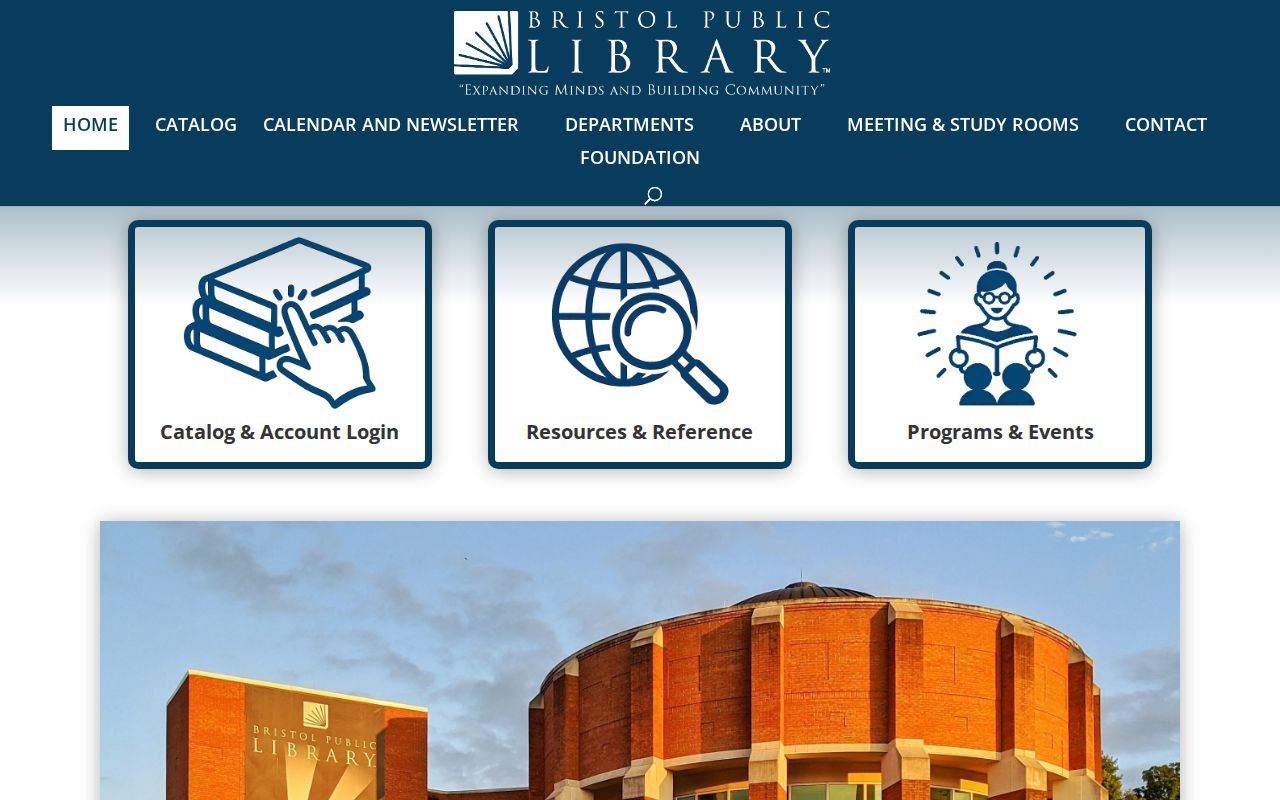
OCR can miss old type. Search surname fragments, a spouse, employer, occupation, or street, then inspect nearby entries by eye. Because joint directories cover both states, verify the street and state before accepting a match.
Check Bristol Custody Records
Tennessee’s Felony Offender Information Lookup, known as FOIL, searches people under state correctional supervision by name or offender number. A result can show identity, status or location, and sentence or release-related data. FOIL is not a full Sullivan County jail list. Someone held by the county may not appear, so current local custody should also be checked with the Sullivan County Sheriff or its verified inmate roster.
The official Tennessee FOIL search is free.
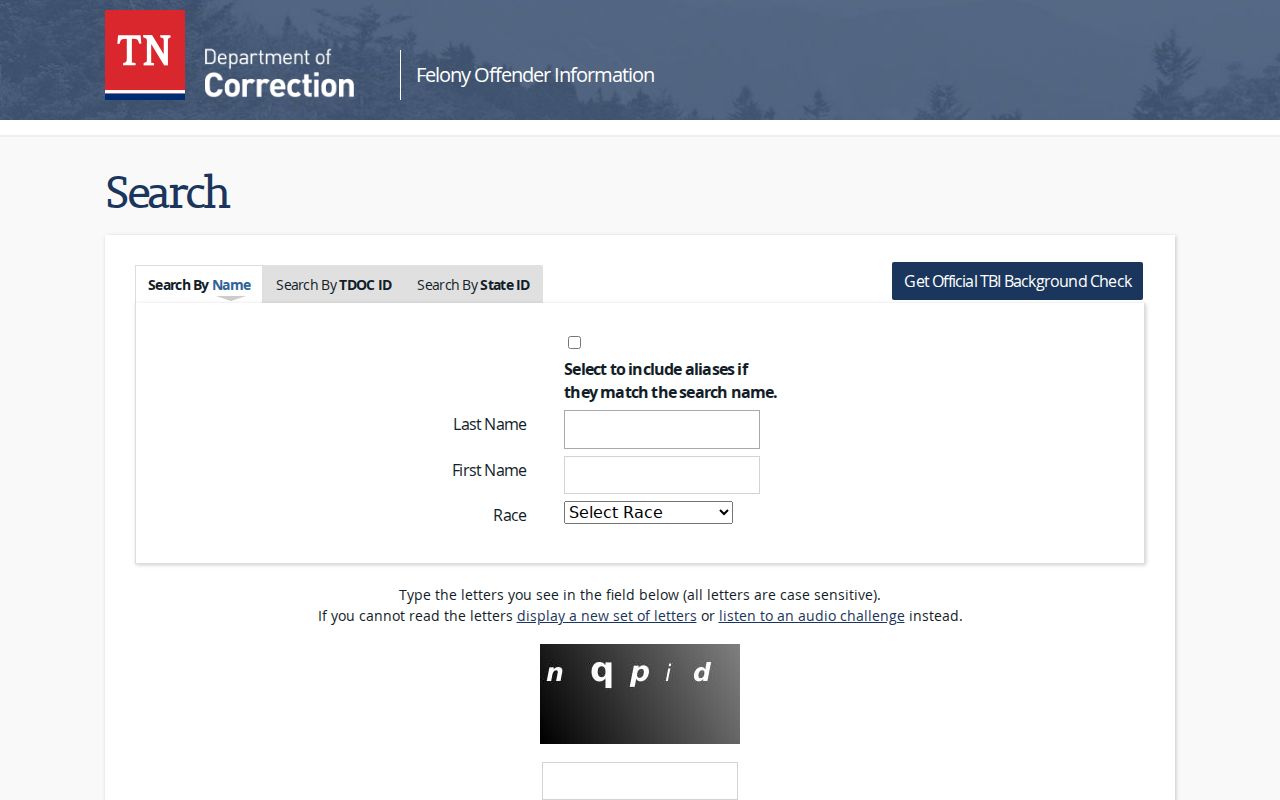
Match an offender number and current status, not just a familiar name. Registry or custody data can change, and a search result does not replace the underlying court record.
Bristol Police Records handles incident, offense, and accident reports subject to confidentiality. Many individual copies may be available at the counter without a copy charge, while larger requests receive an estimate. Active-investigation content and personal identifiers may be withheld.
Search Bristol Business Records
A business name can connect a person to an official filing, credential, county license, or property. Start with the Tennessee Secretary of State business search for an entity name, control number, registered agent, principal office, status, and filing images where available. Then use Sullivan County business-license records and the property roll for the listed address.
The Commerce and Insurance license portal searches by individual or business name, a specific license type, license number, city, or Tennessee county. Results may show credential type and number, status, expiration, and public discipline. A board-specific source may hold more detail for a health, legal, education, or other regulated profession.
Published filings identify formal roles at a point in time. A registered agent is not always an owner, and a business address is not always a home. Compare filing dates, instrument images, license status, and the parcel record. If the name still does not resolve, county licenses, city permits, agendas, and public meeting minutes may add a lawful connection.
Try Free Bristol Records First
Official tools often answer a narrow question without a paid compilation. Property records tie names to parcels. Deeds document conveyances. Court clerks hold filed cases. State business and license searches show formal roles. ClaimItTN searches unclaimed property by owner name and last-known locality. Commercial compilations may lag, merge people with similar names, or hide details behind a subscription.
| Official record | Best use | Important limit |
|---|---|---|
| Property assessment | Owner, parcel, and mailing address | Deed controls title evidence |
| Court file | Parties, filings, dates, and case events | Docket alone may not show outcome |
| Business or license record | Formal role or credential | Status and role can change |
| Unclaimed property | Name and last-known locality | Claim proof stays private |
The Tennessee Unclaimed Property program directs searchers to the free ClaimItTN process.
A claimant must prove identity and a link to the reported address. Heir and business claims need added proof, so a public name hit is the start of a private claim process.
Bristol People Search in Context
The Census Bureau’s Bristol QuickFacts counted 27,147 residents in the 2020 census and estimated 28,107 residents on July 1, 2025. Those dated figures describe the Tennessee city, not the Virginia side. They also explain why a common surname or initials can produce several plausible local results.
Identity still rests on record-to-record agreement. Compare a person’s middle name, age range, spouse, street, parcel, employer, filing date, and document number. Bristol’s long settlement history and cross-state sources make a name-only match especially fragile. Record the source date because owners, licensees, registered agents, custody status, and addresses can change.
Protect Bristol Address Records
Tennessee Safe at Home gives an official substitute address to eligible victims of domestic abuse, stalking, trafficking, rape, sexual battery, and other covered offenses. Government and election records can use the substitute address so the confidential location stays shielded. The program does not erase information that was already public before enrollment.
Property, voter, court, and directory searches can expose different kinds of address history. Treat each one with care. A tax mailing address may not be the physical site. A historical directory can show a past home. A protected voter address must not be reconstructed from other sources. Branch House in Blountville is a local Safe at Home assistance channel, while the Tennessee Secretary of State administers the program.
Use a Bristol people search to verify a lawful personal question, reconnect through safe channels, study family history, resolve an estate, or check a public filing. Stop when the search would defeat a confidentiality measure or put another person at risk.